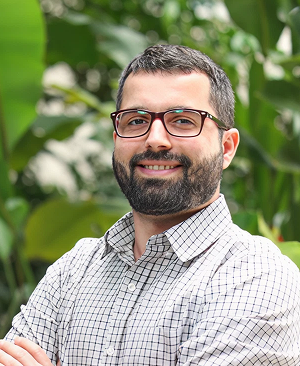
The group led by Thyago Calvo researches the therapeutic potential of the superexpression of neuroprotective factors through epigenetic editing with CRISPR-Cas9 in Alzheimer’s disease.
Everything begins with the understanding that the aging of the Brazilian population is associated with an increase in neurodegenerative diseases, especially Alzheimer’s disease. Besides being very complex, the disease has limited treatments capable of modifying its progression, which are still restricted to patients in specific stages of the disease. An intriguing fact is that some individuals age cognitively healthy, even with the classic markers of the disease in the brain, such as beta-amyloid plaques and tau tangles.
What differentiates them? A hypothesis that motivates this project is that the brain has endogenous resilience mechanisms that compensate for or mitigate the impact of neuropathology. The group seeks to activate these neuronal resilience programs to obtain such benefits.
The project proposes to use epigenomic editing with CRISPR-Cas9 to elevate the levels of some key neuroprotective proteins in neuronal models relevant to the disease. Unlike traditional approaches, which insert exogenous genes or inhibit protein aggregates, this strategy acts on the regulation of endogenous gene expression, without modifying DNA, in a specific, potentially reversible, and safe manner.
The neuroprotective effects of this intervention are initially being studied in vitro, in models of beta-amyloid aggregates and in neurons exposed to neurotoxic agents. If successful, this modality will represent a relevant conceptual and therapeutic advance by exploring the potential of epigenomic editing with CRISPR to activate endogenous neuronal resilience programs. In addition to the strong translational potential, this new generation of advanced therapies could be useful for other complex diseases, whether neurodegenerative or not.