
By Pioneer Science | Published on May 10, 2024 | Last updated on May 14, 2026
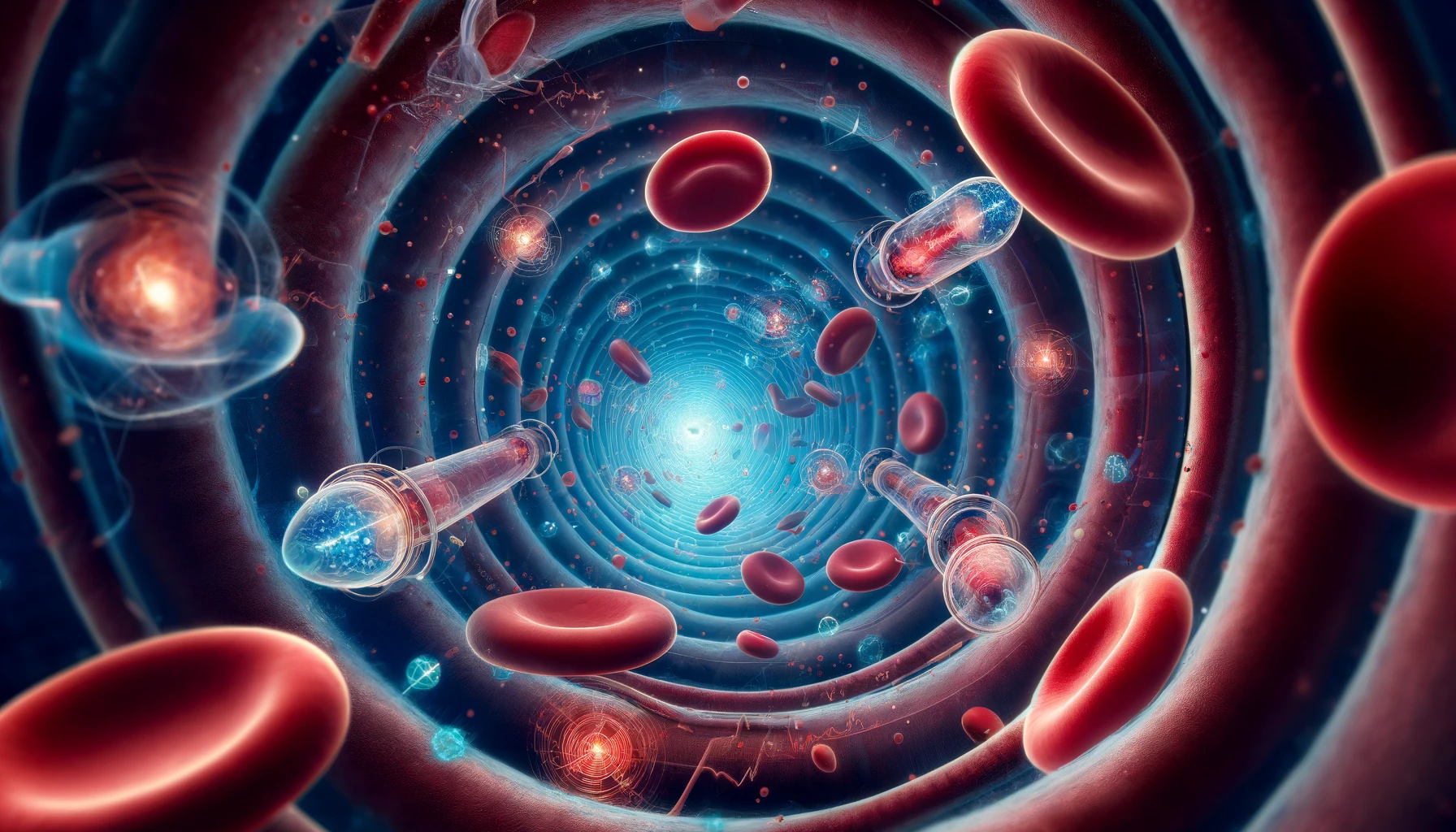
The web series “Quantum Biology in Medicine” is the second season of the project led by the Quantum Bio BR Team. The first season, “Introduction to Quantum Biology,” has its five episodes available for free access.
As the name of the series suggests, the new batch of episodes dives into the relationships between quantum biology and the world of medicine, exploring how this area of science can impact, for example, oncology and neuroscience.
The Quantum Bio BR Team is composed of Dr. Marcelo Sousa, CEO of Bright Photomedicine and associate researcher at IDOR, and PhD students Pedro Alvarez (Gleb Wataghin Institute of Physics) and Matheus Araña (École Polytechnique de Paris), who conduct the discussions in a dynamic and innovative way.
Next, check out the episodes that have already aired.
1st episode: Quantum Technologies in Medicine
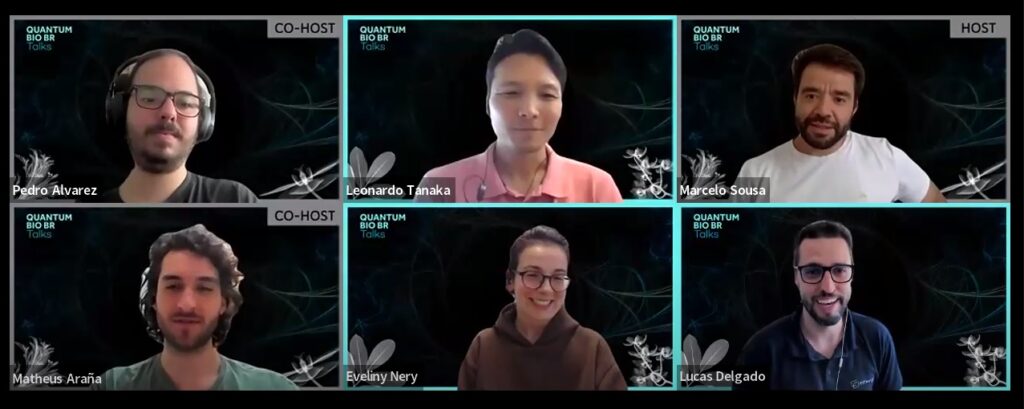
On May 7, Eveliny Nery (University of Helsinki), Leonardo Tanaka (InCor/HCFMUSP), and Lucas Delgado (Emerge Brasil) participated in the series.
With a PhD completed at the University of Surrey, Nery spoke about how science has advanced in the field of quantum biology. During her experience in Surrey, the researcher was part of the first class of the world’s first quantum biology center. She shared how interdisciplinarity was important in her studies. “They brought together physicists, chemists, and biologists to work together. While I worked on the experimental part of photosynthesis, others focused on the theoretical part,” she said. “The way a physicist and a biologist analyze the same problem is different. My contact with physicists helped me improve my research.”
Tanaka reflected on how quantum biology can have a powerful impact on medicine, highlighting diagnostic possibilities. Addressing mechanobiology, he explained that current tests can reveal calcium already accumulated in blood vessels, which indicates the process of atherosclerosis development. Quantum physics, however, could generate much more sensitive diagnostic technologies, identifying small amounts of calcium, which would alert to atherosclerosis in its early stages, favoring prevention.
Delgado emphasized the importance of various profiles of scientists in scientific work. While some advance more in research, others focus more on application. And there are also those skilled in dedicating themselves to both areas. He criticized the division between basic science and applied science. For the engineer, the distinction does not exist. “You don’t work on application if you don’t know how things work,” he said.
These and many other topics were discussed in the first episode. Click the image below to watch the full episode:
2nd episode: Quantum Phenomena in the Senses
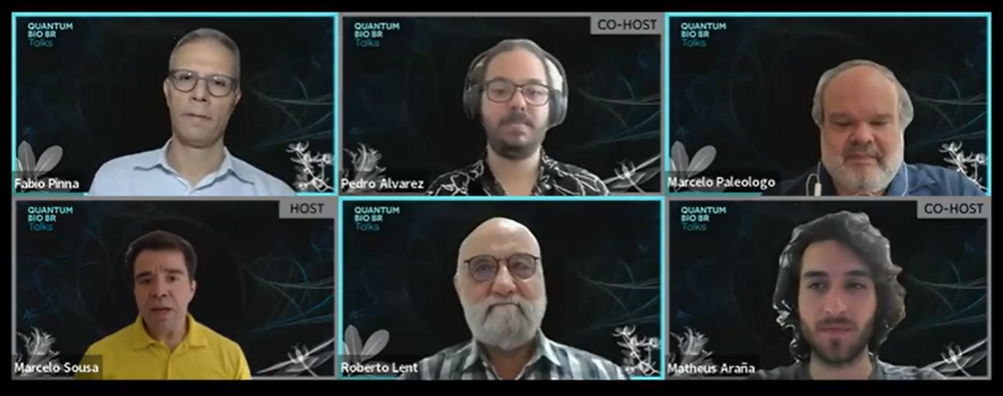
On May 14, Fabio Pinna (University of São Paulo), Marcelo Paleologo (Federal University of Rio de Janeiro), and Roberto Lent (Federal University of Rio de Janeiro and IDOR) participated in the series.
Doctor in otorhinolaryngology from the University of São Paulo, Pinna spoke about the sense of smell. He reflected on how, throughout evolution, we have lost some of this sense compared to other species, such as dogs. “We had the area for capturing smell reduced,” he said. “We started to use smell less; our nose is not close to surfaces but to atmospheric air.” He explained how, with only about 400 olfactory receptors, we can sense more than 10,000 different odors.
Neuroscientist Roberto Lent showed that the act of sensing an odor may seem simple, but it involves a series of steps in the body. According to him, an analysis can be made from heuristic levels, of different scales. On a quantum scale, for example, a molecule of an odorant (something that emits odor) interacts with the receptors of the olfactory system. On a slightly larger scale, observing cells, the odorant converts into action potentials: it navigates through the nervous system until it reaches the olfactory bulb, which processes and transmits information about the odor. On an even larger scale, one can analyze interactions between various networks. Examples include the olfactory network, the emotion network, the memory network, and the executive control network. Thus, it is possible to have a response to an odor (such as throwing away spoiled food or approaching a loved one).
Working directly with quantum physics, Paleologo spoke, among other topics, about his research area: the interaction of radiation with matter, open quantum systems, and quantum information. He also answered questions from the participants.
These and many other topics were discussed in the second episode. Click the image below to watch the full episode:
3rd episode: Quantum Physics in Oncology
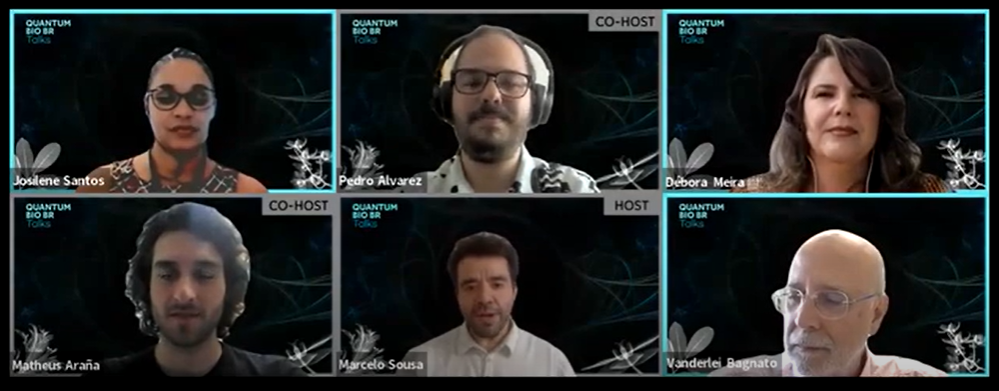
On May 21, Débora Dummer Meira (specialist in molecular oncology and cancer genetics), Josilene Cerqueira Santos (specialist in applied nuclear physics and medical physics), and Vanderlei Salvador Bagnato (specialist in atomic physics and biophotonics) participated in the series.
Directly from the USA, where he teaches a course on melanoma control and treatment, Bagnato spoke about his research area. At USP, he works with the use of light to stimulate the production of toxic substances in specific locations in the body. The idea is to lead tumor cells to death or at least alter their metabolism. His research group consists of about 120 people focused on the quantum mechanics of atoms and molecules and on biophotonics.
A member of the Human and Molecular Genetics Center at UFES, Dummer develops a new way to understand and treat cancer. Starting from the principle that tumors arise from the disordered growth of cells caused by mutations, her group works with quantum physics to make a mathematical prediction of these mutations. It is a way to try to stop or reverse growth. Alongside this, they use natural products (biologically active compounds) to modulate cell proliferation and control tumor advancement. In this way, cancer would be controlled, and the patient could live with the disease without side effects.
Santos drew the relationship between quantum physics and cancer diagnostic and treatment methods. For her, quantum physics is essential in oncology since organisms are made up of molecules and atoms. In this sense, cancer care is aligned with the development of knowledge in the area. She highlighted how diagnosis has improved through advanced tomography technologies, with detailed imaging of tumor behavior (the so-called diagnostic images) or, for example, magnetic resonance imaging with three-dimensional images of high resolution and excellent contrast. In treatment, the evolution in radiotherapy stands out.
These and many other topics were discussed in the third episode. Click the image below to watch the full episode:
4th episode: Light in Medicine – Therapies and Diagnostics
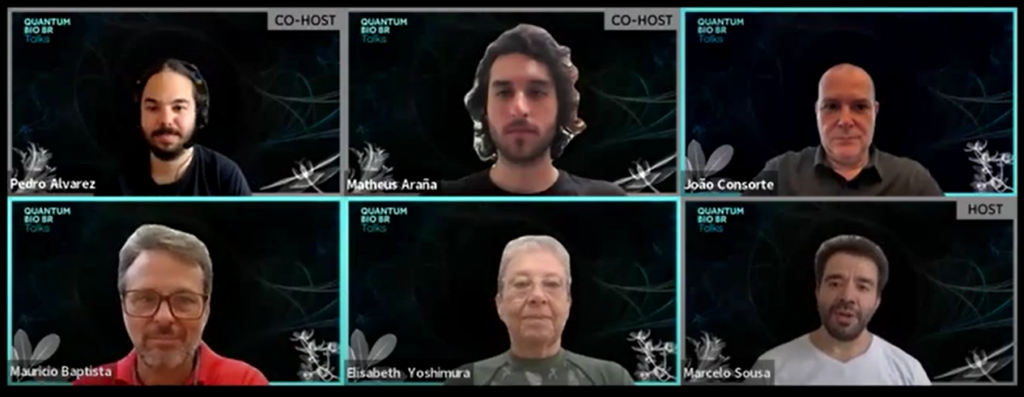
On May 28, Dr. Elisabeth Yoshimura, professor in the Nuclear Physics Department at the Institute of Physics at USP; Dr. Maurício Baptista, professor and researcher in the area of biochemistry at USP, focusing on the interaction between light and biological tissue; and João Consorte, president of IPG Health Brazil, the largest global health communication and marketing group, participated in the series.
Throughout her career, Yoshimura has always worked in the area of radiation. First with ionizing radiation and later with non-ionizing radiation — such as light, which is promising in medicine. She recalled that the relationship between light and health is ancient, citing the Sun God of the Egyptians, recognized not only for the illumination of the star but for its healing potential. Today, it is known that this power is closely related to the production of vitamin D, which combats, for example, rickets.
Still talking about the sun, Baptista, a doctor in the area of photomedicine, brought up an important point about sunscreen. To address the topic, he explained that sunlight has a broad spectrum, including infrared light, visible light, and ultraviolet light. Sunscreen only protects us from ultraviolet B rays, which cause redness. However, during sun exposure, we are exposed to the entire spectrum, which can lead to consequences such as DNA alterations and other effects that are even unknown. “When sunscreen use is recommended, it induces people to have exposure, to burn without knowing,” he said. He emphasized, however, that shorter sun exposure has several positive effects on health.
At the interface between health and the corporate world, Consorte addressed the importance of quantum biology in creating solutions for health. He highlighted the possibilities of photomodulation, which has innovated the treatment of psoriasis. “It is a disease that affects at least 3% of the population, causing skin problems and a consequent social impact,” he said. “Until recently, people with psoriasis had only relaxation as an option; now we see progress. Photobiomodulation can change reality.”
These and many other topics were discussed in the fourth episode. Click the image below to watch the full episode: