
By Pioneer Science | Published on March 5, 2026 | Last updated on May 14, 2026
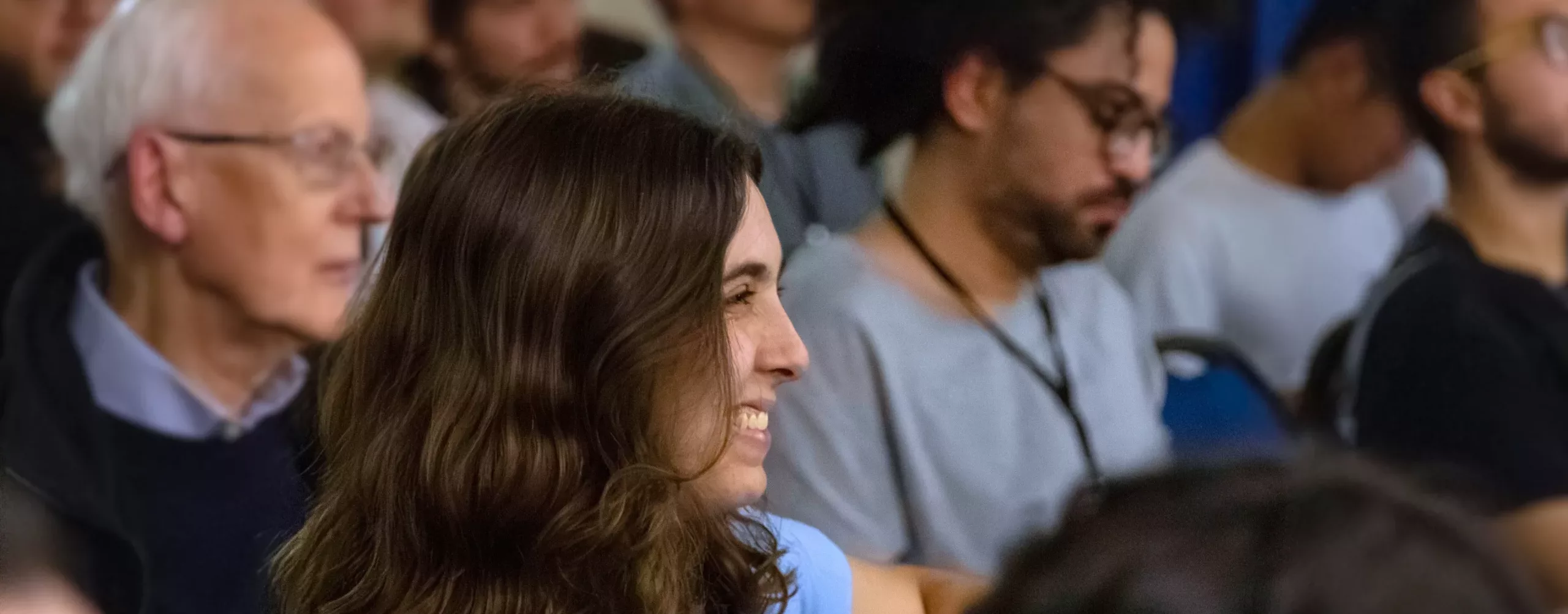
At 20 years old, Gabriela Frajtag earned a spot on the list of awardees in the International Essay Contest on Quantum Biology promoted by the Foundational Questions Institute (FQxI) and Paradox Science Institute with the support of Pioneer Science in Brazil. The competition sought, on an international level, original answers to the question “Is life quantum?” with the offer of up to R$ 300,000 in prizes.
Gabriela was the only Brazilian among the highlights of the contest and won the category aimed at undergraduates securing the prize of US$ 3,000 (R$ 16,000) with an essay on the history and future of Quantum Biology. Recently graduated in Science and Technology from Ilum School of Science, passionate about reading, history, and biographies of science, she found in the contest’s proposal an opportunity to bring together these interests in a contribution that explores the historical landscape of the field.
In an interview with Pioneer Science, Gabriela discusses her relationship with Quantum Biology, the research process for the article, and the importance of scientific communication for young Brazilians.
Gabriela, how did Quantum Biology enter your journey?
My journey has always been filled with science and interest in multiple subjects. It’s no wonder I chose an interdisciplinary degree. I first learned about quantum biology in a book, “Life at the Edge” (Al-Khalili & McFadden), and studying at Ilum School of Science, interdisciplinarity has always been present: I had a lecture on quantum biology with Professor Nelson (who is also the academic coordinator at my college).
Then, the incredible opportunity arose to participate in the Quantum Biology School of Pioneer Science in 2025, and during that week, I was able to deepen my theoretical foundation in physics and biology, as well as hear Brazilian and foreign speakers talk about their research in the field. It was very interesting!
In August 2025, the Quantum Biology School of Pioneer Science brought together young people for an immersive week in Paraty for classes, lectures, poster sessions, and networking aimed at fostering the scientific community and inspiring new careers in the field. What motivated you to participate and how would you describe the experience?

What motivated me was mainly my curiosity. Quantum biology is a field that is still forming, it’s quite new, and having the opportunity to be part of an event that is possibly one of the first focused on the subject (perhaps the first in Brazil) is an immense honor.
The experience in Paraty was very special because it wasn’t just about attending classes; there were also many moments of interaction, questions, and idea exchange, and the cool thing about it was that there were people from various different areas, which only increased the possibility of exchange.
What changed in your career perspective after the experience in Paraty?
Before the experience in Paraty, I already believed in the importance of integrating different areas of science, but during the event, I was very impressed with the organization’s motivation to ensure that we really take what we learned to our own research. I left the event with even more desire to work interdisciplinarily and to explore how quantum biology can contribute to my scientific questions in the future.
You learned about the International Essay Contest on Quantum Biology through the Quantum Biology School group. What was the main motivation for your entry into the Contest?
My thought was: I don’t yet have my own research in quantum biology to write about in the contest, but I would love to tell the story of the field. This is because I love reading, especially history and biographies of science. So I thought my contribution could be precisely this historical overview that I built in the essay.
Your award-winning article addresses the history of Quantum Biology; why is it necessary to recount and record the history of science?
The history of science helps us understand that knowledge does not arise linearly and that everything is the result of context. When I was younger, I would watch television and think: “wow, this is a magic box that allows me to see things that happened in the past.”
Then science explained this “magic” with electronics and optics. And I thought: “so the person who created this must be genius in a way that is almost impossible.” But when we study the history of science, we realize that no one creates anything completely alone or from scratch.
Science is a collective effort, built over time. And understanding this makes science more human and more accessible to those who want to participate in it. Furthermore, recording history is crucial for us to understand how certain ideas arise, disappear, and sometimes return decades later with new evidence or technologies. This helps give perspective on the present of science and on the paths it can take in the future.
What was your research process like for writing the article? What impressed you the most about your discoveries?
The process involved reading books and articles. Since I had already read a book on quantum biology, attended lectures, and gone to the School, some names and discoveries I wanted to write about stayed in my mind. Then, the process was more about trying to understand how certain ideas about quantum effects in biological systems arose and how they were reinterpreted over time.
What impressed me the most was realizing that several ideas that are now more accepted had already been suggested long ago, but at the time, there were no experimental tools to test them. Today we are beginning to have technologies that allow us to investigate these hypotheses more concretely.
What is it like to be awarded in an International Contest, representing Brazil in the field of Quantum Biology?
I was very happy; it was an immense and wonderful surprise. It is important to show that Brazilian students and young researchers are participating in these international discussions and that we can indeed achieve recognition.
The International Contest also serves as a form of scientific communication about different themes that change each year. How do you view scientific communication and what is the relevance of communicating science to young talents in Brazil?
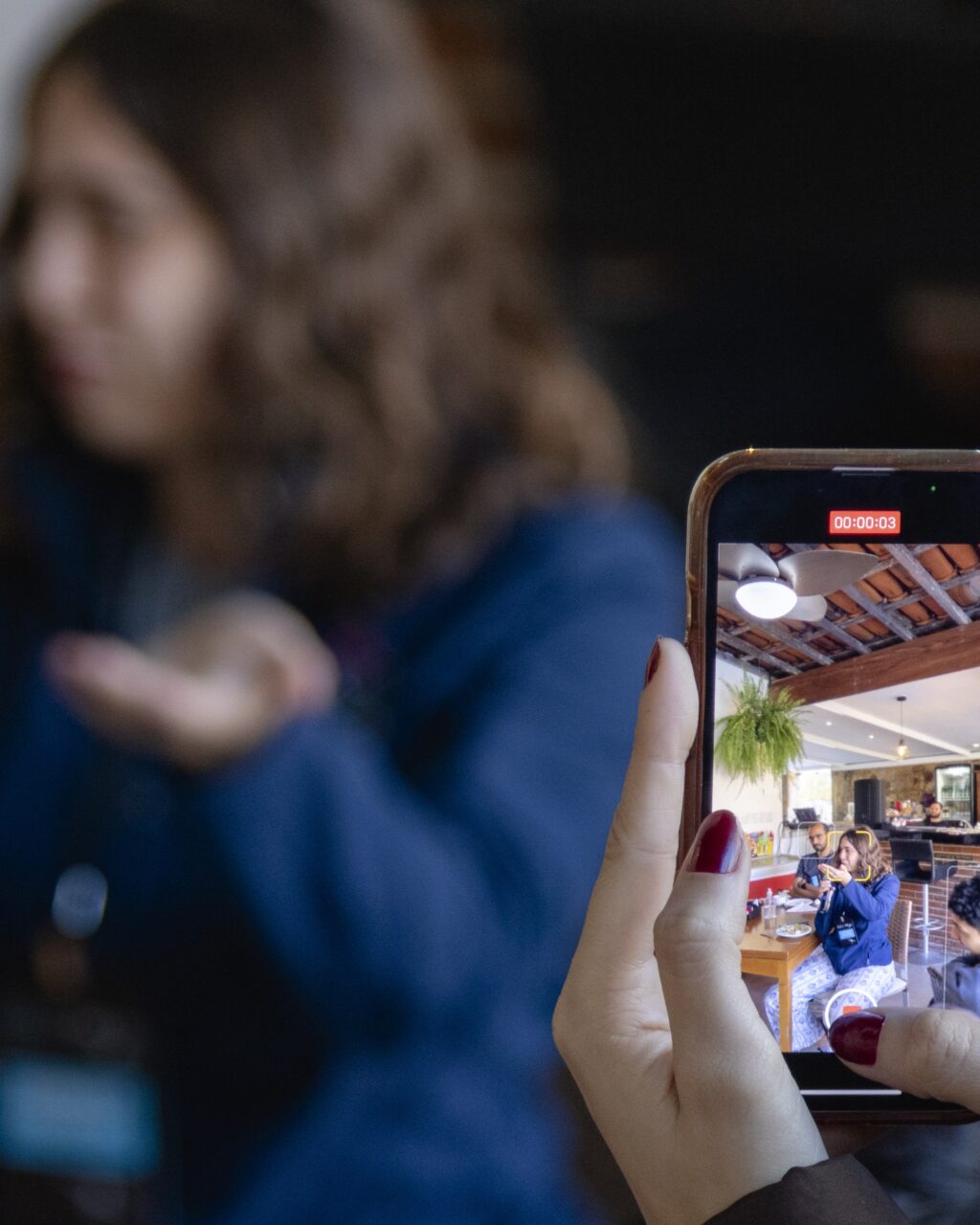
If today I am a trained scientist, it is because of scientific communication. It is often the gateway to the world of more formal science.
In my case, it was programs like Cosmos, by Carl Sagan and Neil deGrasse Tyson, the hours I spent watching experiment videos on YouTube, or reading popular science books. Today I try to do my part as well, talking about the history of science on social media (@gabi_frajtag).
I admit that it has been a while since I recorded videos, but I plan to return soon. Communicating science is important precisely because it can spark curiosity in people who may have never thought about following this path. And it serves to bring the public closer to scientists, generating understanding and recognition.
What would you say to young Brazilian scientists who are also becoming enchanted by science?
Stay curious and don’t be afraid to explore different areas until you find what you truly love. When you discover a question that drives you crazy with curiosity, persist! Sometimes science can be difficult and full of challenges, but it is precisely this curiosity that keeps us investigating and learning.


